I should have asked the following questions along with my discussion above to help you choose:
1) What game are you looking to go after and at what kind of ranges?
2) Will you be hand loading your own cartridges and working up an optimal load with bullet weight and type and powder charge or just buying "off the shelf" ammo?
3) Do you care about “looks†and non-functional frills and do you care about resale value?
Regarding question 1, the game you’re going for matters because as noted above, the 30-06 can be loaded for a huge wide variety of game from the very large 220 grain bullets down to 110 grain bullets for long range varmint shooting. Meanwhile the 308 is only really commonly available from about 130 to 180 grain. If you’re generally going to be going for white tail dear, mule deer, elk, moose, black bear, you can find a solid cartridge in either 308 or 30-06 that you can buy to do the job.
Regarding question 2, you can expand the variability of the bullets you can use in either rifle by hand loading. Basically not all possible configurations are commercially available in bulk – yes there are custom ammo manufacturers out there, but that’s a headache and is VERY expensive. Meanwhile, if you hand load, you can create and customize loads that shoot out of YOUR rifle super accurately with all the performance profiles you need, customized to whatever your purpose is. If you aren’t going to hand load but still want to shoot moose at 300 yards OR coyotes at 700 with the same rifle, you probably need a 30-06 because there will be a greater variety of off-the-shelf ammo available for it.
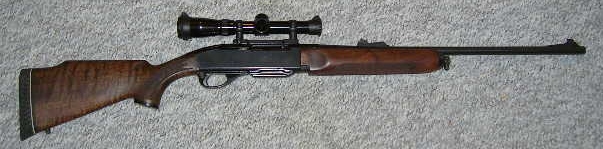
Regarding question 3, it’s about form and function really. A rifle with a fine wooden stock will probably cost more than a polymer stocked rifle and thus you can probably sell a wooden stocked rifle for more than a polymer stocked rifle. However, a polymer stocked rifle will have fewer issues with the stock in changing weather conditions, and will generally be lighter than a wood stocked rifle.
Further, the question of the action comes into play – this is the trigger group and the bolt basically. Lots of “off the shelf†rifles will have utterly terrible triggers with lots of creep (movement which does not actually fire the rifle) and very heavy pull weights (this is done for liability reasons – rifle companies don’t want to get sued when they sell a rifle with too light of a trigger that someone uses irresponsibly and “accidentally†shoots someone with). A good trigger job will cost you a minimum of $75. If you want to drop in an after-market trigger group, you're looking at another couple hundred dollars.
You want a crisp clean breaking trigger of around a 3lb pull for a hunting rifle. Cold fingers and amped up pulse rates at the moment of dropping the hammer on that trophy 12 pointer mean that you don’t want the trigger too light or you run the risk of your shot breaking before you’re ACTUALLY ready for it, and too heavy triggers mean that your hand disturbs your aim/hold as you try to pull the trigger.
Smoothness of the operation of the bolt is also a factor, especially when you’re trying to fire a followup shot – generally speaking misfeeds and such will be VERY low incidence with bolt rifles – lever rifles – maybe not the case.
I carried a Marlin 336 (lever) 30-30 into the woods on my first weekend of deer season this year. At various points through the day we unloaded and reloaded our rifles for various reasons. At one point as I was reloading my rifle, something went wonky with the whole magazine and carrier assembly and as I was trying to chamber a round after loading the mag, an additional round would crowd back, blocking the ability to chamber the round or to eject it if it had been a spent round and pick up another. I eventually got it worked out but it took me a solid 10 minutes or so of fiddling around with it to get everything unloaded and reloaded again – then cycled the 3 rounds through the action just to be sure. You do NOT want that happening when you’re on stand or on a stalk and trying to make a follow up shot.
Now I have fired literally thousands of rounds through lever rifles in pistol calibers (45 colt) and large calibers (45-70), loading those tubular magazines and working the action is nothing new to me. I was perplexed by this occurrence and the next weekend I carried the Winchester model 70 (bolt) 30-06.
Anyway, back to the question of form vs. function. Savage makes the accu-trigger which basically lets you dial down your trigger pull weight to very low amounts while still maintaining a safe trigger that will not fire when the gun is jarred or dropped. It’s really REALLY good and will save you money on a trigger job down the road, I highly recommend that trigger. It’s a little weird to get used to if you’ve never fired anything like it, so make sure you go to a gun shop and check it out before you buy one.
Additionally, Savage offers a so-called “accu stock†which is basically a bedding mechanism that improves the mating of the barrel and action to the stock, thereby providing more repeatably accurate performance. Bedding the rifle is essentially mandatory for long range shooting and any sort of accuracy shooting. You can pay to do this or have it done after you buy the rifle, or you can buy a Savage that already has it done AND it’s done so that it’s basically adjustable for you to tune for optimal performance.
The “problem†if there is any with Savage is that they a) aren’t particularly pretty, and b) don’t have the resale of a Winchester or Remington. Of course, they also don’t have the initial cost of them either, and you can get a Savage with an accu-trigger and accu-stock rifle in 30-06 or 308 for about ~$500-600. Take a look at savages Model 11 FCNS/FHNS (308 “short actionâ€) or 111 FCNS/FHNS (30-06 “long actionâ€) in their “hunter†series – blued barrel polymer stock or the 16/116 FCSS/FHSS – “weather warrior†series with a stainless barrel and polymer stock.
If it sounds like I'm big on Savage rifles - I am, but no I don't work for Savage, or anyone else in the firearms industry lol. I just think that Savage is REALLY offering one of the most highly functional packages for one of the best prices out there. Oh and FYI, savage accuracy is absolutely top notch. They use button rifled barrels rather than hammer forged. Hammer forged barrels as you see in MOST "bulk" production guns are conspicuously absent amongst the ranks of the competitive match shooters.
Also, please plan on spending no less than $100 for a quality, reliable scope. There was a great article in a recent issue of Field and Stream about $100 scopes. Nothing is more sad than watching someone spend who knows how much time, energy, and money picking out the perfect rifle in the perfect caliber and then putting a $20 POS scope on it and wondering why it “doesn’t shootâ€. You don’t need a $1,000 scope, but yeah…
-----signature-----
If ignorance were painful, half the posters here would be on morphine drips.
Everyone playing WoW knows everything about playing two classes: 1) their own and 2) Hunters