





 this is the offending swastika.
http://gawker.com/5874894/a-jewelry-store-in-brooklyn-is-selling-swastika-earrings


btw tons of other culture used it but not the nazi one. why would anyone confuse it with the nazi one is beyond me. A neo nazi wouldn't be caught dead wearing that one!!!!

Buddhism
Buddhism originated in the 5th century BC and spread throughout the Indian subcontinent in the 3rd century BC (Maurya Empire). Known as a "yung drung"[23] in ancient Tibet, it was a graphical representation of eternity.[24]
[edit] East Asian traditions
Swastika on building in Seoul, Korea
The paired swastika symbols are included, at least since the Liao Dynasty, as part of the Chinese writing system (? and ?) and are variant characters for ? or ? (wàn in Mandarin, man in Korean, Cantonese and Japanese, v?n in Vietnamese) meaning "all" or "eternity" (lit. myriad). The swastika marks the beginning of many Buddhist scriptures. In East Asian countries, the left-facing character is often used as symbol for Buddhism and marks the site of a Buddhist temple on maps.
In Chinese and Japanese the swastika is also a homonym of the number 10,000, and is commonly used to represent the whole of Creation, e.g. 'the myriad things' in the Dao De Jing. During the Chinese Tang Dynasty, Empress Wu Zetian (684-704) decreed that the swastika would also be used as an alternative symbol of the Sun.
In Japan, the swastika is called manji. Since the Middle Ages, it has been used as a coat of arms by various Japanese families such as Tsugaru clan, Hachisuka clan or around 60 clans that belong to Tokugawa clan.[25] On Japanese maps, a swastika (left-facing and horizontal) is used to mark the location of a Buddhist temple. The right-facing manji is often referred to as the gyaku manji (??, lit. "reverse manji"
 or migi manji (??, lit. "right manji" , and can also be called kagi juji (literally "hook cross".
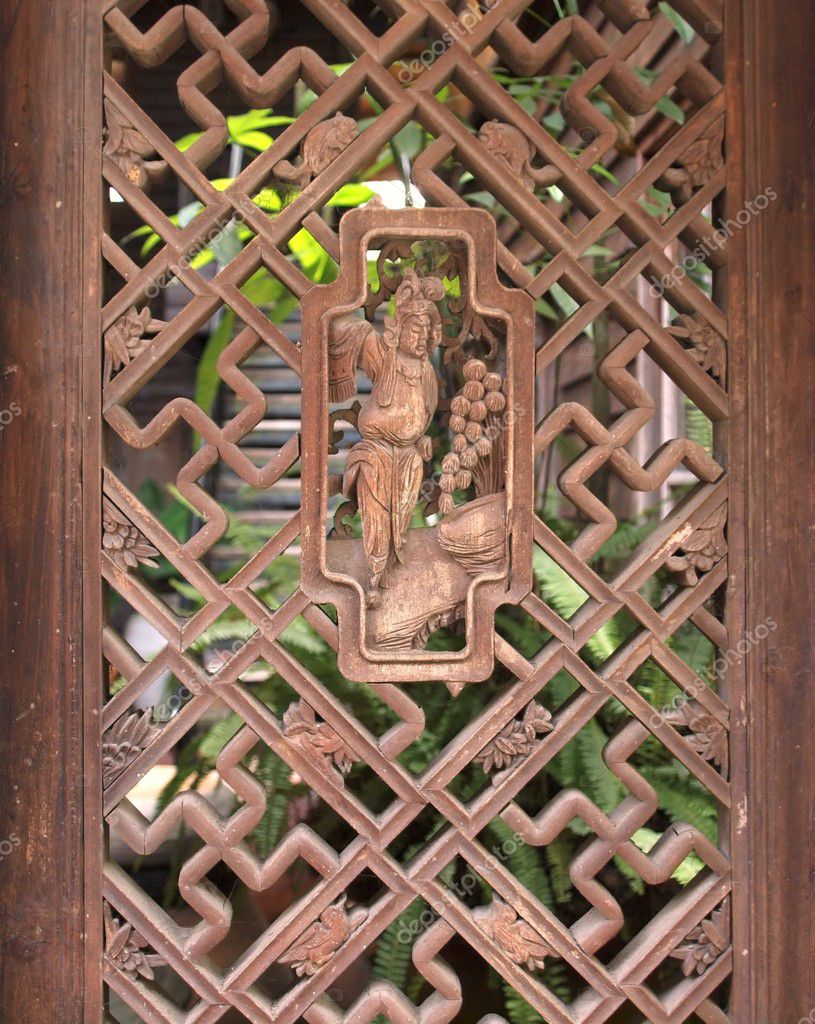
In Chinese and Japanese art, the swastika is often found as part of a repeating pattern. One common pattern, called sayagata in Japanese, comprises left- and right-facing swastikas joined by lines.[26] As the negative space between the lines has a distinctive shape, the sayagata pattern is sometimes called the "key fret" motif in English.
As a pottery graph of unknown provision and meaning the swastka-like sign is known in Chinese Neolithic culture (2400-2000 BCE, Liu wan ??, Qinghai province).
http://en.wikipedia.org/wiki/Swastika
-----signature-----
Fight white guilt and injustice by going to a Native American casino and gamble your money away.
me pic http://acf.curbjaw.com/armchair.htm
Formerly known as :armchair warrior, sysphus, fallen_deamon
http://www.facebook.com/help/contact.php?show_form
me pic http://acf.curbjaw.com/armchair.htm
Formerly known as :armchair warrior, sysphus, fallen_deamon
http://www.facebook.com/help/contact.php?show_form


